


Due to its varied benefits, Milk Thistle is a plant widely used in Phytotherapy since ancient times for its hepatoprotective and regenerative properties on the
liver cells.
The Properties of Milk Thistle are given by the presence of flavolignans (silibin, silidianin and silicristin) and flavonoids.
Let’s discover together the benefits and properties of this plant.
Alcohol-free Milk Thistle Mother Tincture: benefits and indications?
Table of Contents
Milk thistle, what is it?
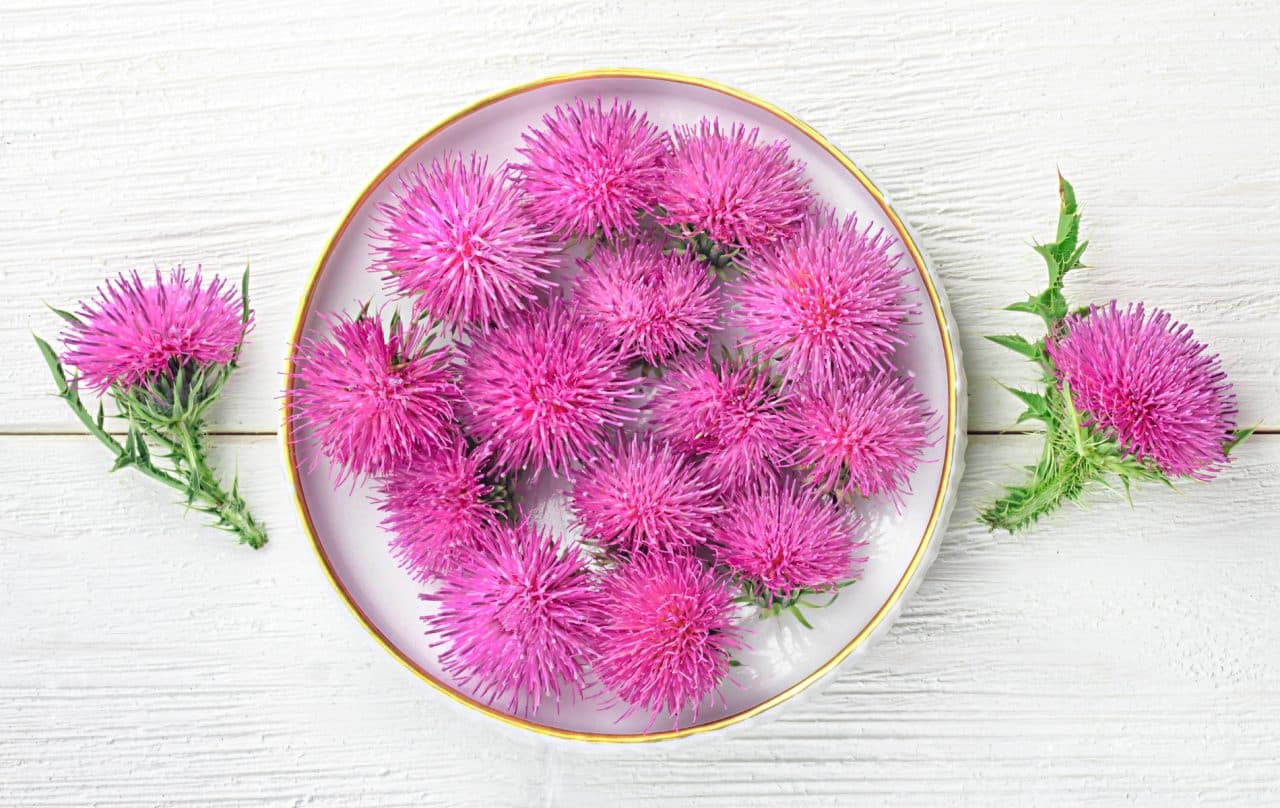
Milk Thistle (scientific name Silybum marianum) is an herbaceous plant belonging to the Asteraceae family. and is widespread in several countries around the Mediterranean basin. It is characterized by its colorful flower bright purple.
It is said that while Joseph and Mary with baby Jesus were fleeing from Herod, Mary, while nursing Jesus, dropped drops of milk over the leaves of the thistle, staining them white: hence the name Marian thistle.
The biologically active substances that are extracted from the milk thistle seeds are silibin, silicristin and silidianin.
Its seeds are used to prepare capsules, extracts, powders and tinctures to take advantage of the Hepatoprotective and regenerative properties on liver cells.

Milk thistle, what does it contain?
Milk Thistle, contains:
- Flavolignans (components that form a phytocomplex called
Silymarin, predominantly consisting of three molecules: silybin, silycristine e silidianin)
- Lipids with high concentration of unsaturated fatty acids: linoleic acid, oleic acid, palmitic acid.
- Tocopherol, sterols and essential oil
- Tannins
- Bitter substances
- Protein, tyramine, mucilage
- Flavonoids: apigenin, kemferol, quercetol, catechin tannins
- Sitosterol, fumaric acid, triterpene acetate, polyacetylenes
What are the benefits of milk thistle?
Milk Thistle is considered an allied plant of the liver used therefore to treat liver disorders, especially due to the action of the silymarin contained in it, which boasts strong antioxidants, anti-inflammatory, cytoprotective and hepaprotectants.
It also intervenes in the process of regeneration of hepatocytes, stimulates protein synthesis and also has an antioxidant against free radicals created by alcohol and toxic substances.
This plant is also used to improve digestive processes, increase blood pressure and help to control blood sugar.

Milk Thistle and Silymarin:
Several studies seem to show how the silymarin is effective in different types of liver disease, such as cirrhosis, chronic hepatitis, and hepatic steatosis.
It is also indicated in various poisonings induced by toxic chemicals and poisonous substances or alcohol, with improvement of liver enzymes such as transaminases and gamma GT.
The action hepatoprotective carried out by silymarin would appear to be unfolded through different mechanisms of action, which we attempt to explain below.
First, As mentioned earlier, the Silymarin is a phytocomplex, predominantly consisting of three molecules: silybin, silycristin and silydianin which perform several useful functions.
- The Silicristine and Silidianin it contains are able to protect the liver from substances that are toxic to it (such as alcohol and toxins), through a modification of the cell membranes Of hepatocytes. Such modification, in fact, would prevent toxic substances and toxins from entering the interior of liver cells.
- Silibin, on the other hand, carries out its hepatoprotective through decreasing the production of superoxide anions by Kupffer cells and through inhibiting the synthesis of leukotrienes a hepatic level. Therefore, the Silibin plays an antioxidant and free-radical scavenger role.
It can be said that Silymarin is one of the most effective hepatoprotective substances known to exist, so much so that in 1998 the European Commission recognized the use of standardized milk thistle fruits with 70-80% silymarin content in liver disorders and diseases. Today, silymarin products are used throughout Europe, and dosages can range from 240-360 mg/day to higher concentrations depending on the pathology.
In addition, a recent study, also showed that the silibin and silicristine are capable of exerting a protective effect on the kidneys from cellular damage caused by paracetamol, vincristine e cisplatin, through increasing the rate of proliferation, stimulating the synthesis of proteins e DNA and increasing the activity of lactate dehydrogenase in renal cells.
Milk Thistle Mother Tincture
Mother tincture (TM) is a liquid preparation, obtained by extracting the fresh drug by percolation or maceration with an appropriate solvent.
The solvent most used in mother tinctures is a hydroalcoholic solution (water + alcohol) with a variable alcohol content (most often between 60 ° and 80 °) depending on the solubility of the active ingredients to be extracted.
La mother tincture of Milk Thistle is an herbal preparation extracted from the leaves and fruits of the plant, which are macerated in a 1:10 ratio in a solution of water and Alcohol. It is an herbal remedy believed to be useful for its sedative and antidepressant properties due to its beneficial effects on the nervous system.

Milk Thistle Glyceric Macerate: what it is
In recent years, Mother Tinctures extracted with the Vegetable Glycerin instead of Alcohol, which makes them better in several respects. In addition, since Glycerin is a less potent type of solvent and therefore less extractive than Alcohol, innovative extraction techniques are used, such as the‘Ultrasonic Extraction.
Ultrasonic extraction is an innovative, clean, quick and easy extraction technique that allows to extract the active ingredients from plants and medicinal plants in particular and to make quality phytoextracts, taking advantage of the exclusively mechanical action exerted by the cavitation effect produced by sound waves.
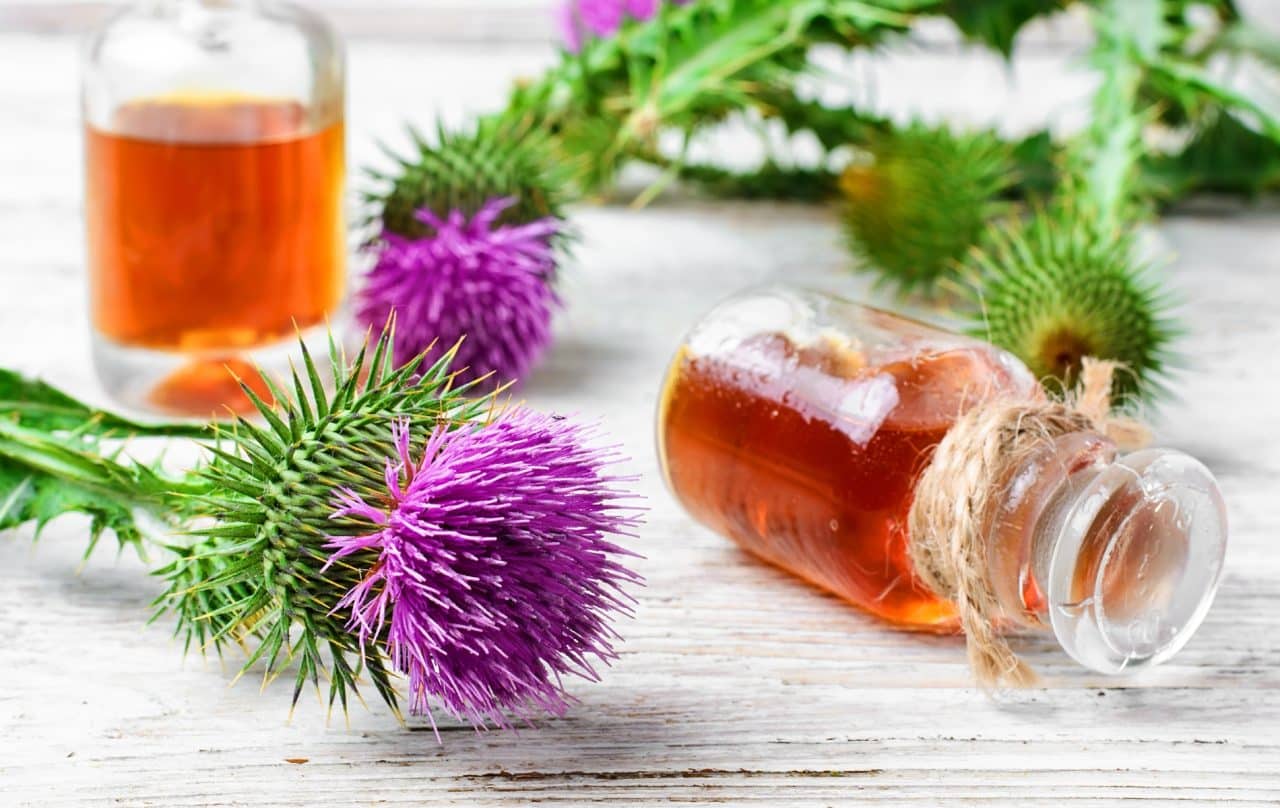
The Alcohol-free Mother Tincture of Milk Thistle is obtained by hydroglyceric maceration of the seeds of the Milk Thistle, again at a ratio of 1:10, and is an innovative type of Mother Tincture, which, having been obtained by the ultrasonic process, makes it better from several points of view.
We at Vonderweid, thanks to our 20 years of experience in the field of dietary supplements and after a long process of research and development in our laboratories for the production of
Non-alcoholic Mother Tinctures, we have managed to obtain a product with the desired characteristics.
Our non-alcoholic mother tinctures are classified as Dietary Supplements and are regularly notified to the Ministry of Health.
The properties of Milk Thistle:
Alcohol-Free Mother Tincture of Milk Thistle, or Glyceric Macerate of Milk Thistle, is a natural remedy for which properties of:
- Aid for digestive function
- Aid for liver function
- Aid for the body’s purifying functions
All of these claims are regulated and approved by the Italian Ministry of Health for their physiological effects, aimed at “optimizing the body’s functions within homeostasis.”
Milk thistle, how many drops to take?
For taking Milk Thistle drops, we recommend using 40 drops dissolved in a glass of water, 1-3 times a day . In children, we recommend halving the dosage.
Always remember Not to exceed the recommended daily dose. Keep out of the reach of children under 3 years of age. Dietary supplements should not be understood as a substitute for a varied and balanced diet and healthy lifestyle, and we always recommend the advice from your doctor or nutritionist before intake.
The advice, therefore, is to always consult your primary care physician before starting to take the mother tincture of Milk Thistle, then consult a good herbalist or phytotherapy expert to determine how to take it and in what amounts.
passion and innovation
Our products
FREQUENTLY ASKED QUESTIONS:
CONTRAINDICATIONS OF MILK THISTLE?
To date, based on studies conducted on the intake of milk thistle products, it has been found that, in general, extracts of this plant when taken in the correct manner are well tolerated.
However, side effects such as gastrointestinal disturbances ( abdominal bloating) may be experienced and mild laxative action in sensitive individuals. Milk thistle may also give rise to allergic reactions, which are more common among individuals with established allergies to plants in the same family (such as ambrosias, chrysanthemums, marigolds, daisies).
MILK THISTLE WHEN TO TAKE IT?
The intake of milk thistle, in the form of tincture or dry extract, is recommended in cases of digestive disorders, hepatic alterations and in the adjuvant treatment of alcoholic and nonalcoholic cirrhosis, steatosis, hepatitis and other acute and chronic liver disorders.
MILK THISTLE, HOW MANY DROPS TO TAKE?
For the intake of Milk Thistle drops, we recommend the use of 40 drops dissolved
In a glass of water, 1-3 times a day .


