


Echinacea Angustifolia mother tincture: what is it and what are the benefits?
Table of Contents
What is Echinacea?
Echinacea is a genus of perennial herbaceous plants that includes nine species, but only three of them are used for commercial purposes: Echinacea purpurea , Echinacea pallida and
Echinacea angustifolia
.
They are plants native to North America, belonging to the larger Asteraceae family and mainly interesting from an ornamental and herbal point of view.
Echinacea , thanks to its immunostimulating properties, is one of the most sought after medicinal plants in the Italian phytotherapeutic panorama.
The term Echinacea are commonly referred to as the roots, the
rhizome
and the aerial parts of some plants native to the temperate zones of North America.
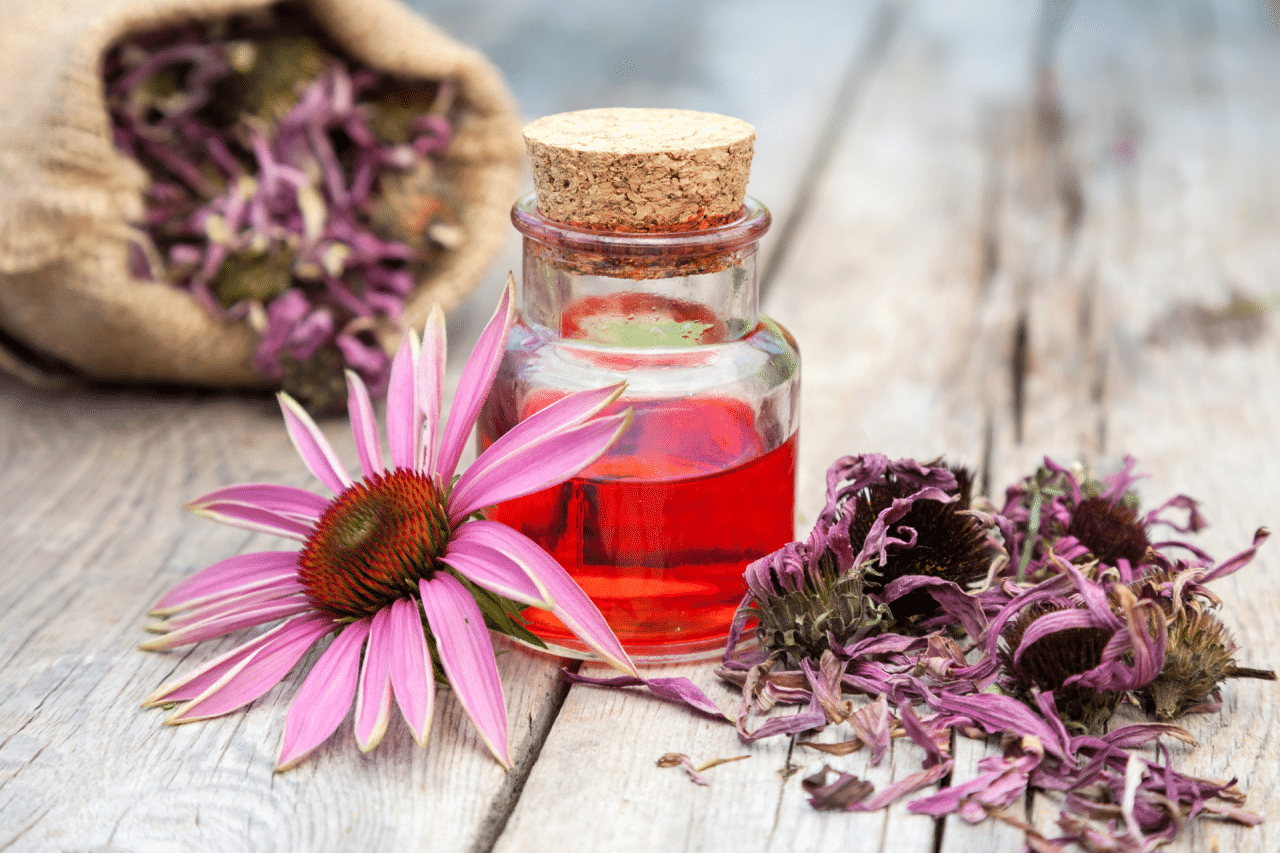
Echinacea Angustifolia: why is it the most used?
L’
Echinacea Angustifolia
is one among the known medicinal plants and belongs to the Asteraceae family, also known as Compositae, to which several other known plants belong. It is the same family as daisies, for example, but also as Arnica montana.
The “composites”, as they are called by botanists, all have a flower built in a similar way, in the shape of a chalice, surrounded by petals 2. The daisy is a typical example of this and Echinacea Angustifolia also reflects this form.
Echinacea was first used centuries ago by Native Americans of the Sioux tribe, who used it to treat various ailments or accidents , such as rattlesnake bites or toothache. In fact, during archaeological excavations in the sites frequented by the Lakota Sioux, seeds of Echinacea dating back to the 17th century were found.
Difference between Echinacea Purpurea and Angustifolia?
There are actually as many as 9 species belonging to this genus but the most studied are three:
Echinacea Angustifolia
, Echinacea purpurea and Echinacea pallida, all of which differ botanically in composition and pharmacological activity, although similar in their clinical use. In fact, the latter is the reason why Echinacea is best known to Europeans since the 18th century while Native Americans have been using it for much longer, for example, to heal the wounds .

What are the types of Echinacea used in herbal medicine?
The three most commonly used echinacea species include E. angustifolia , E. pallida , and E. purpurea . Although all of these species have been studied in clinical trials, E. Angustifolia is the most studied and has the strongest evidence of its effectiveness as a treatment for cold and flu symptoms.
Echinacea pallida (also known as white echinacea) has been shown in several studies to contain higher levels of polysaccharides than pale or purpurea, but still lower levels than Angustifolia .
Echinacea Mother Tincture: what is it and how is it obtained?
The mother tincture (TM) is a liquid preparation, obtained by extracting the fresh drug by percolation or maceration with a suitable solvent. The solvent most used in mother tinctures is a hydroalcoholic solution (water + alcohol) with a variable alcohol content (most often between 60 ° and 80 °) depending on the solubility of the active ingredients to be extracted.
The mother tincture of echinacea is a herbal preparation extracted from the fresh plant of Echinacea angustifolia or Echinacea purpurea. Very useful for its protective properties, it is used to prevent infections and speed up healing.
The “drug” (used part) of Echinacea Angustifolia corresponds to the root; harvest in winter ; while for the Purpurea to the aerial part harvested in late spring. The plant is used fresh, as it dries, it loses most of its properties. The mother tincture of echinacea is prepared in a weight ratio drug: solvent of 1:10 and alcohol content of 55% vol .
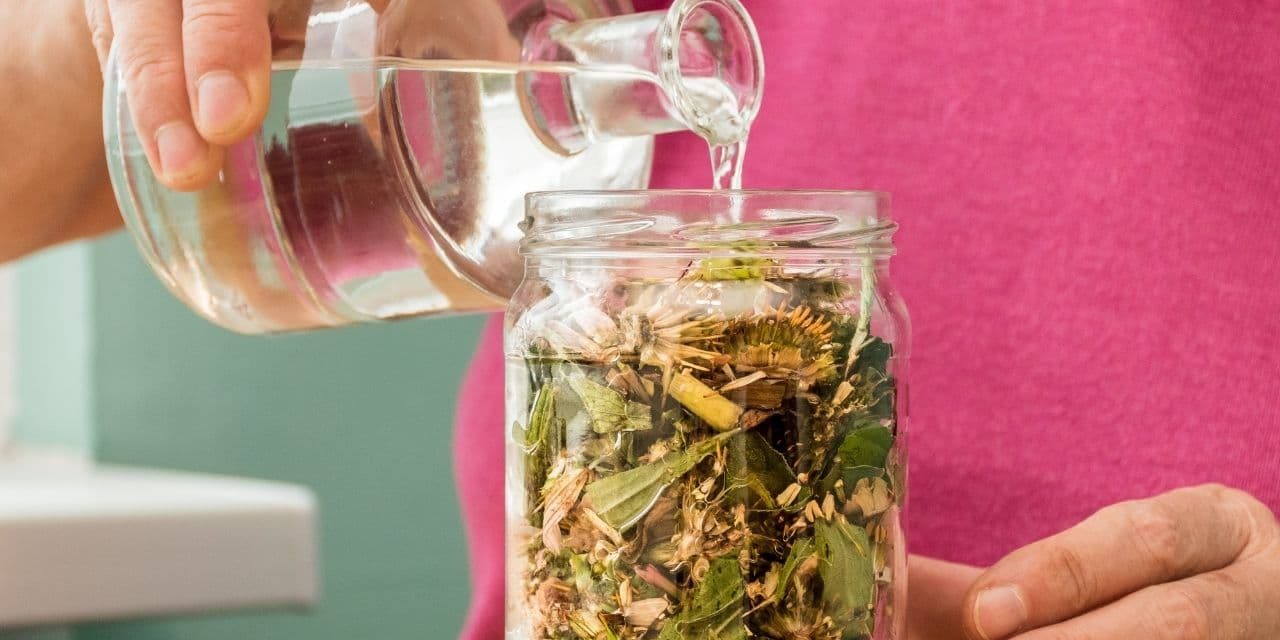
Echinacea Mother Tincture Alcohol-free: what is it and who is it suitable for?
La Echinacea Mother Tincture without alcohol, or
Glyceric Macerate of Echinacea
, is obtained by hydroglyceric maceration of the solvent, again at a ratio of 1:10.
Since water is less suitable for extraction than alcohol, extraction techniques such as Ultrasonic are used.
Echinacea Glyceric Macerate: what is it?
In recent years, Mother Tinctures extracted with the
Vegetable Glycerin
instead of Alcohol, which makes them better in several respects.
In addition, since Glycerin is a less potent type of solvent and therefore less extractive than Alcohol, innovative extraction techniques are used, such as the
Ultrasonic Extraction
.
Ultrasound Extraction is an innovative, clean, quick and easy extraction technique that allows the extraction of active ingredients from plants and medicinal plants in particular and the production of quality phytoextracts, taking advantage of the exclusively mechanical action exerted by the cavitation effect produced by sound waves.
The Echinacea Mother Tincture without Alcohol is obtained by hydroglyceric maceration of the roots of Echinacea, again at a ratio of 1:10, and is an innovative type of
Mother Tinctures
, which having been obtained by the ultrasonic process, makes it better in several respects.
We at Vonderweid, thanks to our 20 years of experience in the field of Food Supplements and after a long process of research and development in our laboratories to produce
Non-alcoholic Mother Tinctures
, we have managed to obtain a product with the desired characteristics.
Our non-alcoholic mother tinctures are classified as.
Dietary Supplements
and are regularly notified to the
Ministry of Health
.

Echinacea: how to take it and for how long?
The recommended dosage of echinacea depends on a person’s age, health, and other factors.
The recommended daily dose is generally 300 to 500 mg in the case of capsules, or 20 to 30 drops 2 times a day in the case of Mother Tinctures.
It is recommended to start taking
Echinacea supplements
for preventive purposes 2 to 3 months before the arrival of cold seasons. The dosage of Echinacea varies according to whether it is used as a prevention or as a cure, and also according to the purity and quality of the product.
To treat cough or cold, take 30-40 drops of mother tincture 2 or 3 times a day between meals, decreasing the frequency as the symptoms disappear.

Echinacea, what is it for and what are its benefits?
L’
Echinacea
, whose roots and aerial parts are mainly used, has immune-stimulating, anti-inflammatory and vulnerary properties. It is therefore needed for prevent colds , relieve flu symptoms, counteract recurring infections and, for topical use, treat wounds, ulcers, burns , canker sores and dermatitis.
The medicinal use of this plant is lost in time and the modern pharmacopoeia has extended popular knowledge by attributing to these plants a prominent role in strengthening the immune defenses. In addition to external uses for medicinal or phytocosmetic purposes, echinacea can also be used for the treatment of flu and colds. L’European Medicines Agency (EMEA) has approved [1] the use of Echinacea purpurea flower extract for short-term prevention and treatment of colds
Echinacea’s main function is to strengthen the immune system, allowing it to fight infections and viruses. The berries and roots of this plant contain chemicals that can help with the following:
- Fight cold e flu and Respiratory tract infections (sinusitis, bronchitis)
- It also helps to reduce inflammation due to its anti-inflammatory action
- It can also be used to treat rashes, skin infections, eczema, psoriasis, and acne.
What does Echinacea contain ?:
Echinacea contains several bioactive compounds , including
- POLISACCHARRIDES
- FLAVONOIDS
- DERIVATIVES OF CAFFEIC ACID AND CHICORIC ACID , WHICH APPEARS TO BE THE MOST ACTIVE COMPOUND.
The active ingredients are found in the root and are: ketoalkenes And ketoalkynes with hydroxylated derivatives differentiated between the extracts of Echinacea pallida and of Echinacea angustifoglia, essential oil from 0.2 to 2%, derivatives polyacetylenes, derivatives ofcaffeic acid among which theechinacoside (up to 11% while the cinarina is absent), glycoproteins, polysaccharides (the root ofE. pallida it does not contain alkamides unlike the E. angustifolia


